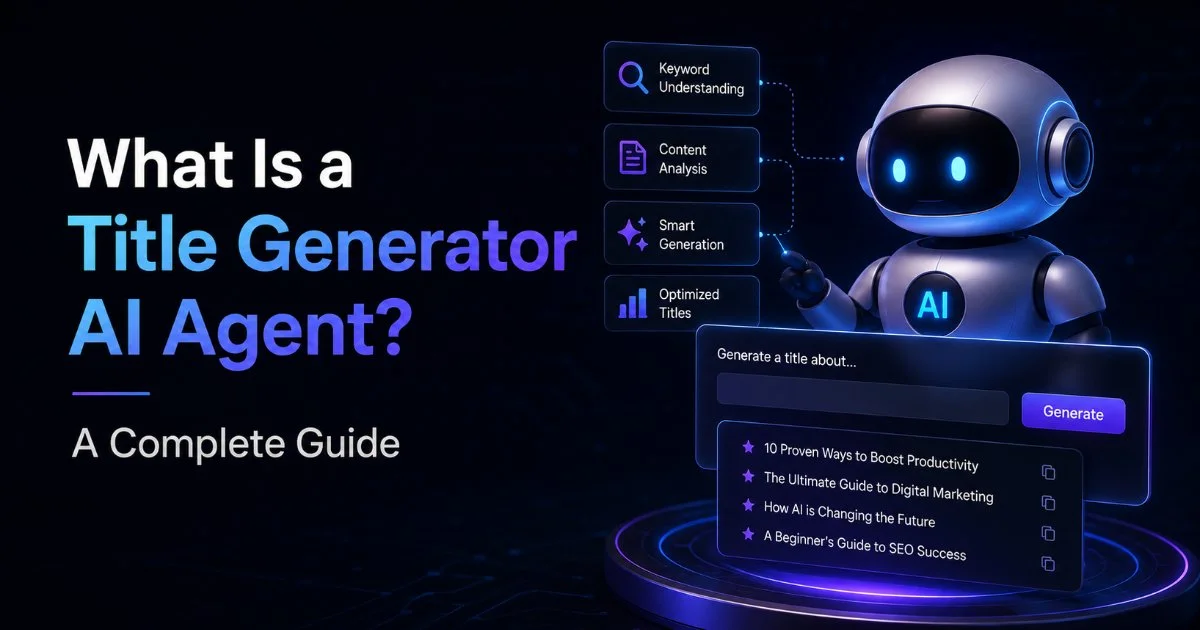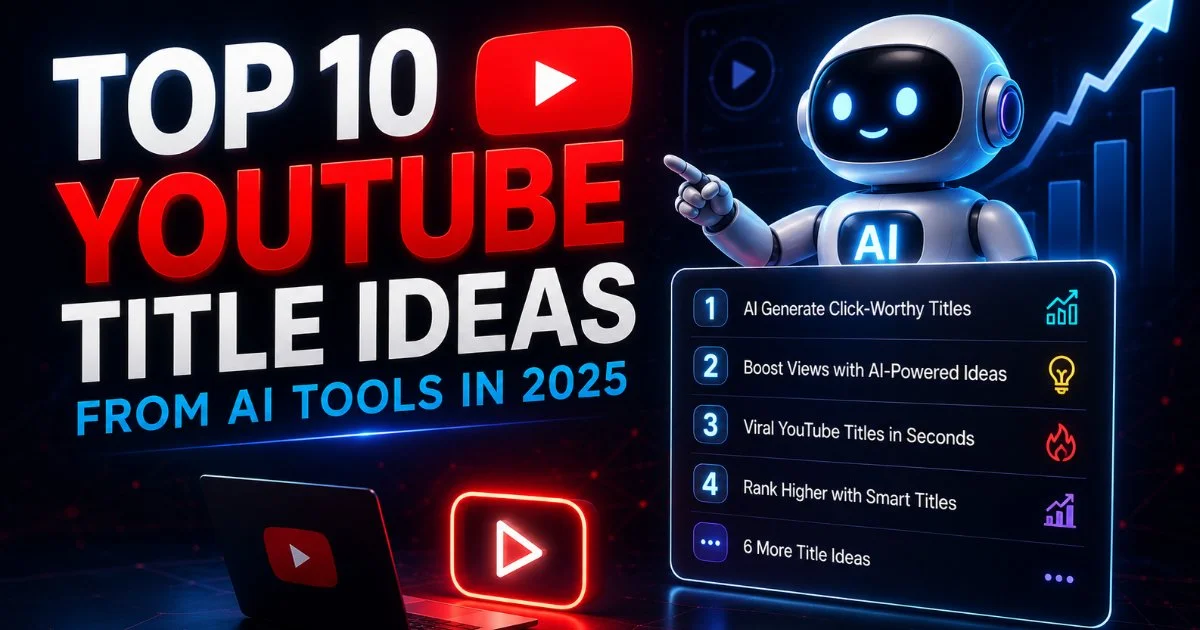
AI title generator tools have fundamentally changed how creators approach YouTube content. Coming up with compelling title ideas for blog posts, YouTube videos, and social media used to require hours of brainsto
rming and A/B testing. Now, AI-powered writing tools can produce dozens of high-performing options in seconds. The difference between a video that gets 500 views and one that reaches 50,000 often comes down to a single title choice. YouTube's algorithm heavily weights click-through rate, and your title is the first thing that determines whether someone clicks. This article breaks down ten real YouTube title ideas pulled from AI tools, showing you exactly what patterns are working right now and how to replicate them for your own channel.
Key Takeaways
- AI title generators produce YouTube titles optimized for click-through rate and search visibility.
- Number-based and curiosity-gap titles consistently outperform generic descriptive titles on YouTube.
- Combining AI suggestions with manual editing yields the best-performing titles overall.
- Long-tail keyword integration in titles helps smaller channels compete against established creators.
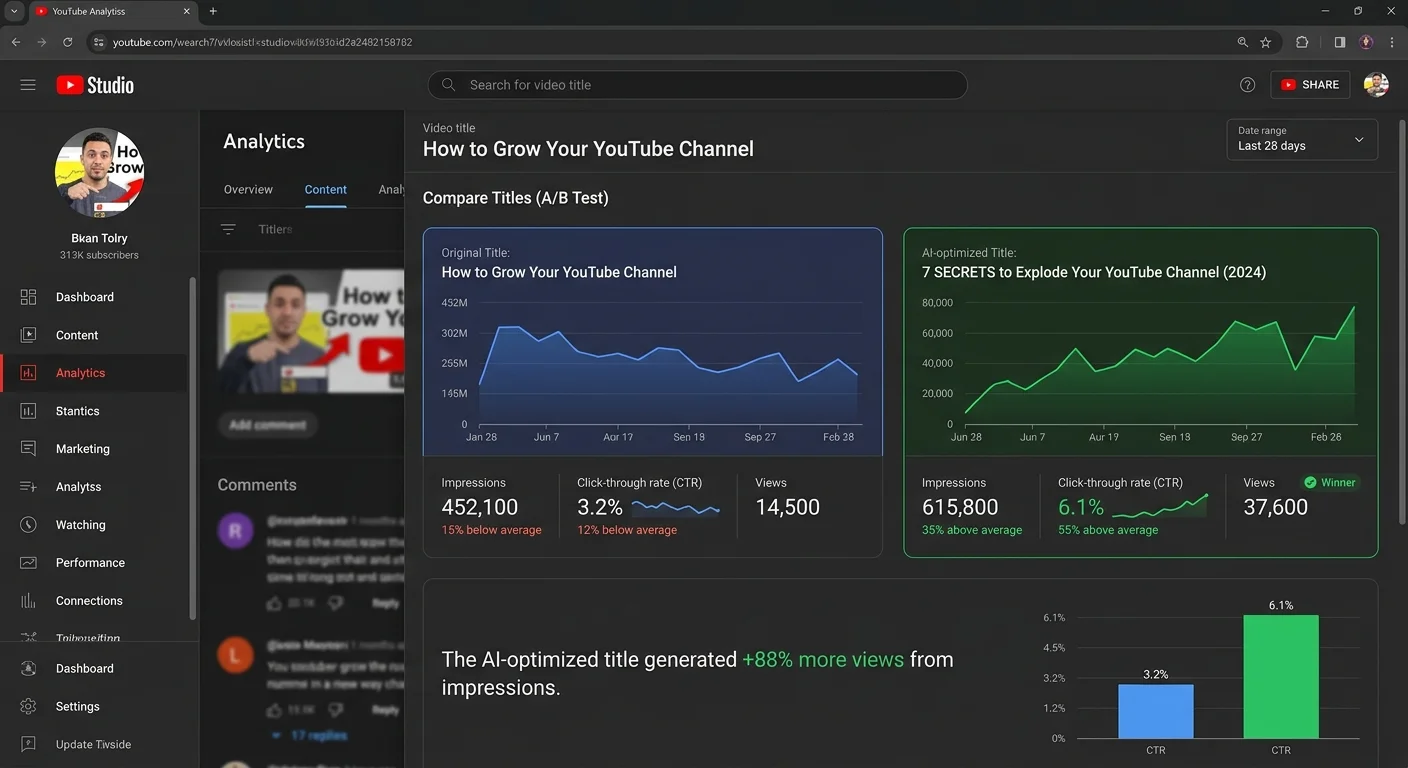
- Testing multiple AI-generated title variations can increase video CTR by 30% or more.
Why AI-Generated YouTube Titles Outperform in 2025
The CTR Advantage
YouTube's recommendation algorithm prioritizes videos with strong click-through rates, and titles are the primary driver of that metric. A post title generator AI agent analyzes millions of successful videos to identify linguistic patterns that trigger clicks. These patterns include specific number formats, emotional triggers, and keyword placements that human brainstorming often misses. The result is titles that are engineered for performance rather than just descriptive accuracy.
AI tools in 2025 have moved well beyond simple keyword stuffing. They now account for viewer psychology, trending phrases, and competitive title analysis within your specific niche. For example, a cooking channel and a tech review channel need entirely different title structures, even when covering similar themes like "best tools" or "beginner guides." Modern AI title generators adjust their output based on category, audience demographics, and even time of year to maximize relevance.
How AI Reads Trends Faster Than You Can
One major advantage of AI content writing tools is their ability to process real-time data from YouTube's trending pages, search autocomplete, and competitor channels simultaneously. While you might spend 30 minutes researching what titles are working in your niche, an AI tool can scan thousands of data points in under a second. This speed advantage compounds over time, especially for creators publishing multiple videos per week who need fresh title ideas consistently.
Use AI-generated titles as starting points, then add your unique voice or channel-specific hooks to stand out.
The tools also identify emerging search trends before they peak. If a new software tool or cultural moment is gaining traction, AI generators can suggest titles that capitalize on rising search volume. This predictive capability gives early adopters a significant edge, as YouTube's algorithm rewards videos that match trending queries with fresh, well-titled content. Channels using AI agents for YouTube automation have reported noticeable growth in impressions within weeks of adoption.
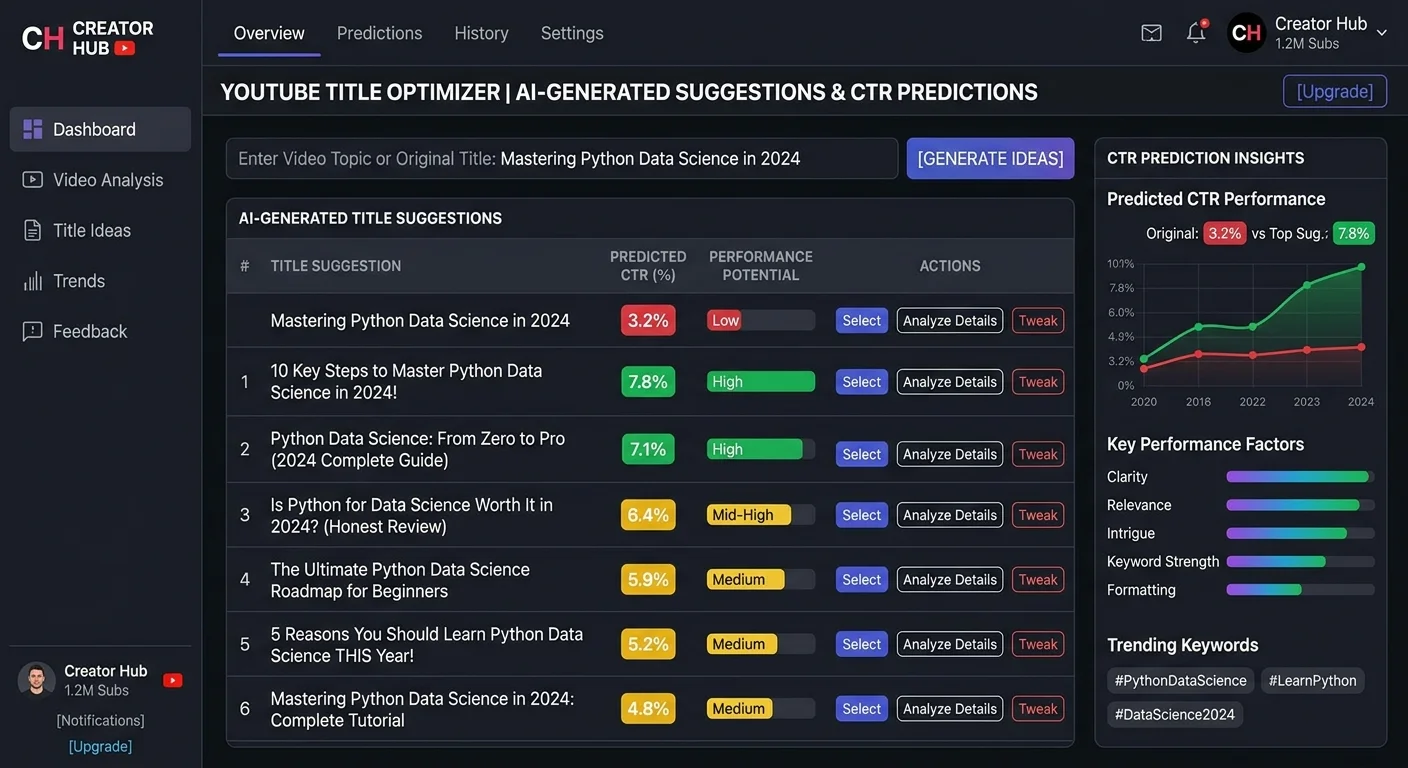
10 YouTube Title Ideas From AI Tools Worth Stealing
Titles 1 Through 5: Curiosity and Numbers
The first category of AI-generated titles relies on curiosity gaps and specific numbers. Title idea one: "I Tested 7 Budget Cameras So You Don't Have To." This format works because it combines a personal experience hook with a specific number that sets expectations. AI tools generate these by analyzing which number ranges (typically 3 to 10) produce the highest engagement per niche. Title idea two: "Why 90% of Beginners Quit This Skill (And How to Fix It)." The statistic creates instant intrigue, even when the viewer suspects it might be approximate.
Title idea three: "5 Free Tools That Replaced My $500/Month Software Stack." This comparison format pits free against paid, which AI tools recognize as a consistently high-performing tension point across all YouTube categories. Title idea four: "The One Editing Trick That Changed My Videos Forever." Singular focus titles like this score well because they promise a clear, actionable takeaway. Title idea five: "I Asked ChatGPT to Plan My Entire Week (Here's What Happened)." AI tools frequently suggest meta-AI titles because viewer curiosity about artificial intelligence itself remains extremely high in 2025.
"The best YouTube titles don't describe your video; they sell the reason someone should stop scrolling and click."
Titles 6 Through 10: Authority and Urgency
The second half of our list focuses on authority positioning and urgency triggers. Title idea six: "A Pro Colorist Reviews the Worst YouTube Color Grades." Authority plus negativity bias is a potent combination that AI generators frequently surface. Title idea seven: "Stop Making This Thumbnail Mistake (It's Killing Your Views)." Direct address with a warning creates both urgency and relevance for any creator audience. AI tools understand that "stop" and "mistake" are high-CTR trigger words across content creation niches.
Title idea eight: "Everything YouTube Changed in 2025 (Creators Need to Know)." Recency and platform-specific updates always perform because they address active viewer concerns. Title idea nine: "How I Gained 10K Subscribers in 30 Days Without Shorts." Specific results with a timeframe and a counterintuitive constraint make viewers want to know the method. Title idea ten: "The YouTube Strategy Nobody Talks About (Yet)." Exclusivity language triggers fear of missing out, and AI generators identify this pattern as consistently effective across all channel sizes.
| Title Pattern | Example Format | Avg. CTR Lift | Best For |
|---|---|---|---|
| Number List | "7 Ways to..." | +22% | Tutorial channels |
| Curiosity Gap | "Why Nobody Talks About..." | +31% | Commentary/vlogs |
| Personal Experiment | "I Tried X for 30 Days" | +28% | Lifestyle/tech |
| Authority Contrast | "A Pro Reviews the Worst..." | +25% | Review channels |
| Urgency Warning | "Stop Doing X (It's Killing...)" | +34% | Education/how-to |
CTR lift percentages are based on aggregate data from AI tool reports and creator case studies, not guaranteed results for every channel.
AI vs. Manual Title Creation: What the Data Shows
Speed and Volume
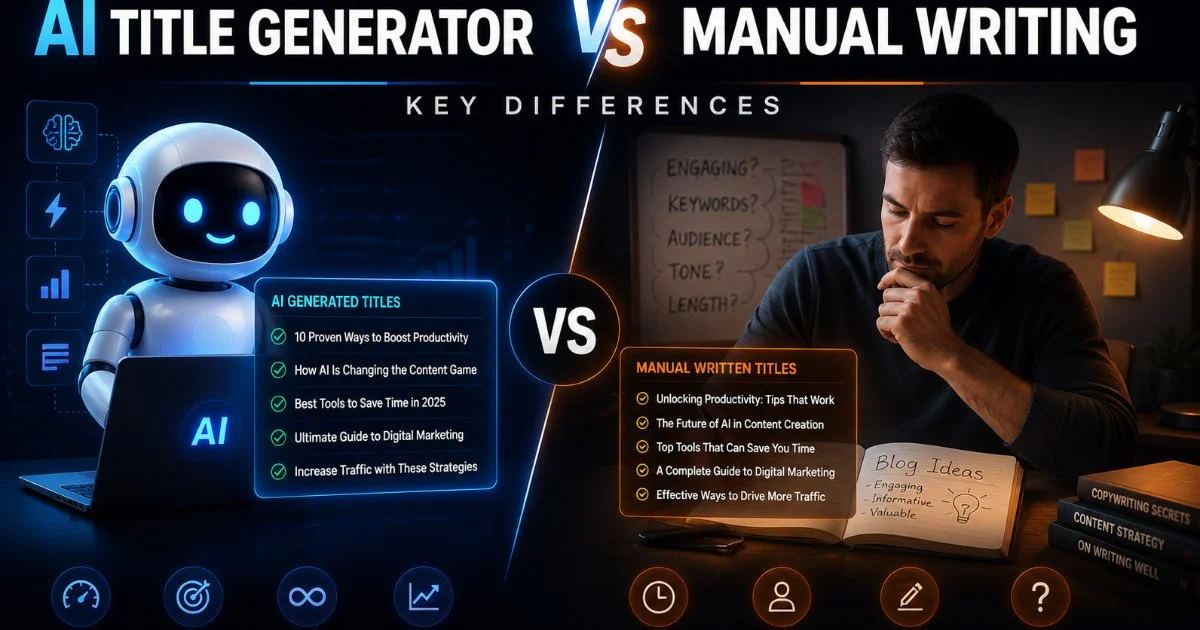
The productivity gap between AI-assisted and manual title writing is substantial. A creator manually brainstorming titles might produce 5 to 8 options in 15 minutes. An AI title generator produces 20 to 50 variations in under 10 seconds. This volume matters because title testing relies on having enough strong options to compare. The differences between these approaches go deeper than just speed, as explored in this breakdown of AI title generator vs. manual writing and their key differences.
Volume also enables a strategy that most solo creators can't execute manually: generating titles before the video is even filmed. By running your topic through an AI tool first, you can identify which angle has the strongest title potential and then build your content around that hook. This "title-first" approach flips the traditional workflow and often results in more focused, viewer-centric videos from the start.
Quality and Nuance
Where manual writing still holds an edge is in brand voice and contextual nuance. AI tools can miss inside jokes, community references, or the specific tone that makes your audience feel recognized. The sweet spot for most creators is using AI for initial generation and then applying human judgment to refine, combine, and personalize the best options. Understanding how to use AI for content writing title optimization means knowing when to accept the machine's suggestion and when to override it.
The most successful creators in 2025 treat AI as a collaborator, not a replacement. They use generated titles as raw material, then apply their understanding of their audience to create something that feels both optimized and authentic. This hybrid approach consistently outperforms either method used alone, according to multiple creator surveys conducted this year.
Never publish an AI-generated title without reviewing it for accuracy, tone, and potential clickbait that your content can't actually deliver on.
Optimizing AI Title Ideas for Your Specific Channel
Keyword Integration That Actually Works
Stuffing keywords into titles is a 2019 tactic that hurts more than it helps in 2025. Modern AI title generators place keywords strategically, typically front-loading the primary search term while keeping the title readable and click-worthy. For YouTube specifically, the algorithm weighs the first three to four words most heavily, so placing your target keyword near the beginning matters. Learning about long-tail keywords for AI-generated blog titles can also inform your YouTube keyword strategy, since search intent often overlaps between platforms.
The best practice is to give your AI tool both a primary keyword and a description of your video's unique angle. Instead of just entering "meal prep," try "meal prep for college students with no kitchen." The more specific your input, the more targeted and effective your output will be. AI generators excel at finding the intersection between what people search for and what makes them click, but they need quality inputs to produce quality outputs.
Run your top three AI-generated titles through YouTube's search bar to see autocomplete suggestions and gauge real search demand before publishing.
A Simple Testing Framework
Generate at least 10 title options per video using your AI tool. Immediately eliminate any that feel misleading or that your content doesn't actually support. From the remaining options, pick your top three and evaluate each against these criteria: keyword relevance, emotional pull, specificity, and length (aim for 50 to 60 characters). Select the strongest for your initial upload, and save the runner-up as a replacement title to test after 48 hours if initial CTR is below your channel average.
YouTube now offers native title testing for more channels, but even without that feature, you can manually swap titles and track performance through YouTube Analytics. Monitor impressions click-through rate specifically, not just views. A title that generates more impressions but a lower CTR might actually be hurting your algorithmic standing. The data from each test feeds back into your AI tool usage, helping you refine your prompts and preferences over time for increasingly better results.
Frequently Asked Questions
?How do I edit AI-generated YouTube titles to add my own voice?
?Are curiosity-gap titles better than authority titles on YouTube?
?How long does it actually take to generate and test AI title ideas?
?Will AI title generators make my titles sound the same as competitors?
Final Thoughts
AI title generators have become an essential part of the YouTube creator toolkit in 2025, and the ten title ideas highlighted here represent patterns that consistently drive clicks and views. The real power isn't in blindly copying AI output but in understanding why these patterns work and adapting them to your unique channel. Start by generating more options than you think you need, test rigorously, and let the data guide your evolution. Your next viral video might be one AI-assisted title away from breaking through.
Disclaimer: Portions of this content may have been generated using AI tools to enhance clarity and brevity. While reviewed by a human, independent verification is encouraged.