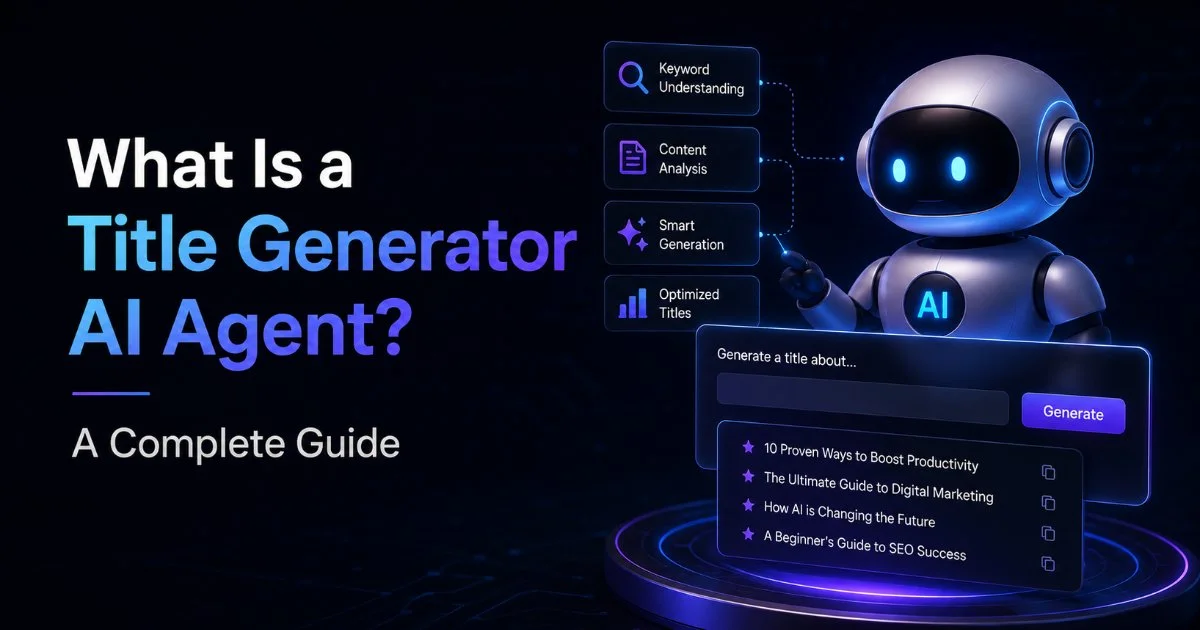
An AI title generator is a tool that uses artificial intelligence to transform a topic, keyword, or rough idea into polished, high-performing title options for any type of content. Whether you're writing a blog post, uploading a YouTube video, crafting a social media update, or building a product landing page, the right title can make or break your content's performance.
Titles are the first thing readers see, and they directly influence click-through rates, search rankings, and social shares. Yet most creators spend surprisingly little time on them. An AI title generator solves this by producing dozens of variations in seconds, each optimized for a specific platform and audience.
Instead of staring at a blank text field wondering what might work, you get a structured starting point grounded in what actually performs. For content creators and marketers dealing with high-volume publishing schedules, this is a meaningful shift in how titles get made.
Key Takeaways
- An AI title generator produces multiple title options from a single keyword or topic input.
- Titles directly affect click-through rates, search rankings, and audience engagement across platforms.
- These tools work for blog posts, YouTube videos, ads, product pages, and social content.
- Good titles balance emotional appeal, clarity, keyword placement, and character length constraints.
- AI-generated titles should always be reviewed and refined by a human before publishing.

How an AI Title Generator Works
The Role of Language Models
At its core, an AI title generator is powered by a large language model (LLM) trained on vast amounts of text data, including articles, advertisements, product descriptions, and social media posts. These models have absorbed patterns in how effective titles are structured: word order, emotional triggers, keyword placement, and length. When you provide a topic like "email marketing tips for small businesses," the model draws on these patterns to generate titles that feel natural and compelling. The quality of output depends heavily on which LLM powers the tool, and choosing the right language model for marketing tasks has a real impact on results.
The AI doesn't just randomly string words together. It evaluates the semantic meaning of your input and considers factors like search intent, readability, and format conventions for different content types. A blog post title idea generated for an informational query will look very different from a title meant for a YouTube thumbnail or a paid ad headline. This contextual awareness is what separates modern AI content tools from older keyword-stuffing generators that produced robotic, unusable output.
Input and Output Flow
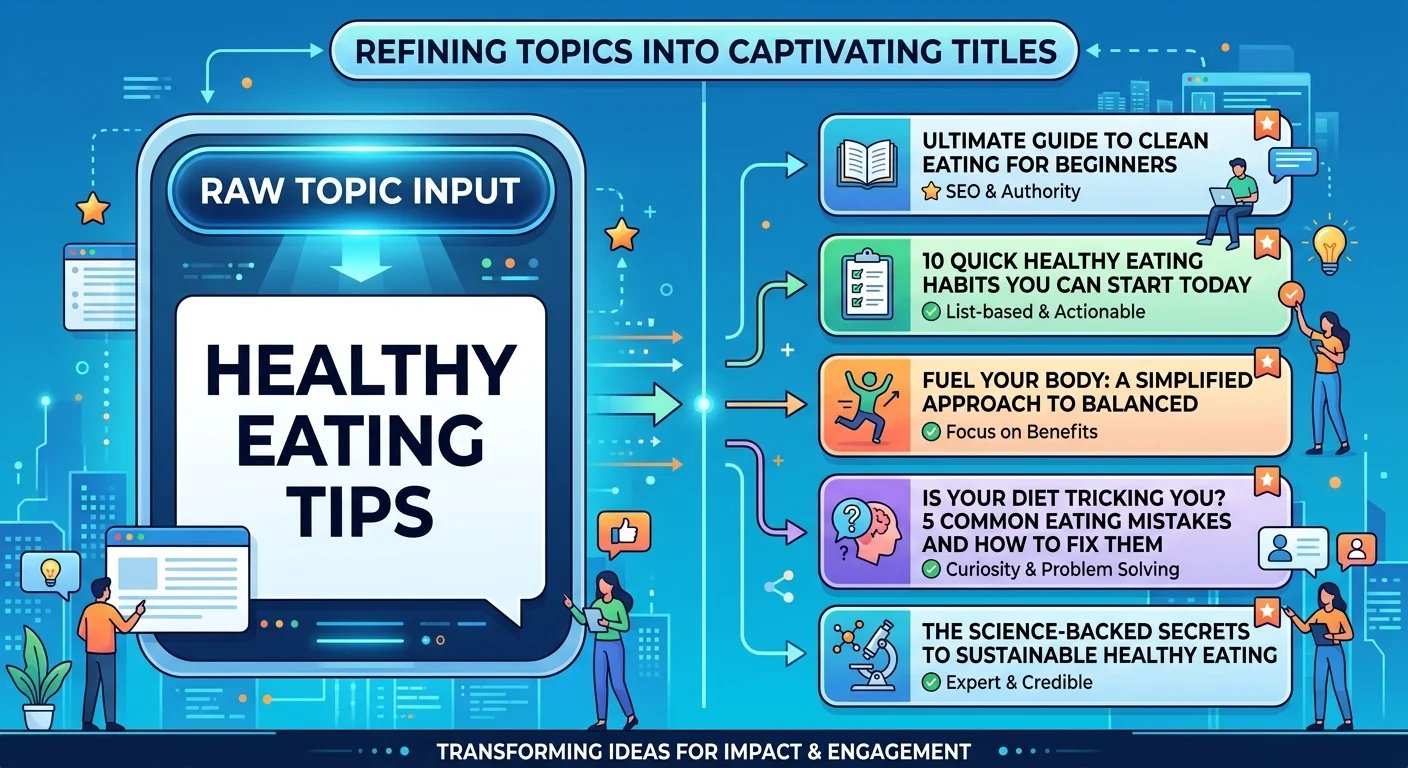
The typical workflow is straightforward. You enter a keyword, phrase, or brief description of your content. Some tools, like the one at Title Generator, let you specify the content type (blog, video, ad) and tone. The system then returns a batch of title options, often ranked or categorized by style. You might see a mix of how-to titles, listicles, question-based titles, and curiosity-driven headlines all from a single input.
Enter your primary keyword plus a short phrase describing the angle or audience for more targeted results.
What makes this workflow powerful is speed. A marketer planning content for the week can generate blog post title ideas for ten different articles in under five minutes. That same process, done manually with brainstorming and competitive research, could take hours. The AI handles the divergent thinking phase, and you handle the editorial judgment of picking and refining the best option.
Why Titles Matter More Than You Think
SEO and Click-Through Impact
Research consistently shows that titles are among the strongest factors influencing whether someone clicks on a search result, opens an email, or watches a video. An academic study on the importance of titles found that even in scholarly publishing, titles with clear, intriguing phrasing significantly outperform generic ones in terms of readership and citations. The same principle applies tenfold in commercial content, where competition for attention is fierce and constant.
For SEO specifically, your title tag is one of the most heavily weighted on-page ranking signals. An SEO title generator helps you place your target keyword naturally within a title that also appeals to human readers. This dual optimization, satisfying both algorithms and people, is what makes AI-assisted title creation so practical. You're not choosing between ranking well and sounding good; you're doing both simultaneously.
Platform-Specific Demands
Different platforms have different title requirements, and a content headline generator that accounts for these constraints saves real time. Google displays roughly 55 to 60 characters of a title tag before truncating it. YouTube favors titles under 70 characters but rewards emotional and curiosity-driven language. Social media posts perform best with punchy, conversational titles that stop the scroll. A single AI title generator can produce variations tailored to each of these contexts from the same core topic.
Consider YouTube video titles as an example. A creator making a video about home espresso machines might enter that topic and receive options like "5 Espresso Machines Under $200 That Actually Taste Good" or "I Tested Every Budget Espresso Machine, Here's What Won." Both are formatted specifically for YouTube's audience expectations: numbered lists, personal experience, and a clear value proposition. That same input could produce blog-optimized versions like "Best Budget Espresso Machines for Home Use (2024 Guide)," which prioritizes search-friendly structure.
Always double-check that your final title fits within character limits for your target platform to avoid truncation.
Common Misconceptions About AI-Generated Titles
One of the most persistent myths is that AI-generated titles are generic or formulaic. Early headline generators did produce repetitive, template-driven output. Modern tools built on advanced language models are different. They can match tone, adjust for audience sophistication, and produce genuinely creative options. That said, not every suggestion will be a winner. The AI generates candidates; your editorial instinct picks the right one. Treating AI output as a final product rather than a draft is a mistake, but that's true of any writing tool.
Never publish AI-generated titles without reviewing them for accuracy, tone, and brand alignment.
Another misconception is that using an AI title generator is somehow "cheating" or will result in penalties from search engines. Google has been clear that AI-assisted content is acceptable as long as it's helpful and accurate. The search engine cares about quality, not whether a human or machine drafted the first version. Marketers who use AI content tools alongside their own expertise consistently outperform those who avoid them entirely, simply because they produce more content and test more variations.
"AI generates candidates; your editorial instinct picks the right one."
A third misconception involves the belief that titles don't need much thought at all. Some creators treat titling as an afterthought, slapping a descriptive label on their content and moving on. This ignores the data. Titles are the single most visible element of any piece of content in search results, feeds, and email inboxes. Spending an extra minute refining a title with AI assistance can meaningfully improve engagement rates across every channel.
Finally, some people worry that everyone using the same AI title generator will produce identical titles. In practice, this rarely happens. Different inputs, different contexts, and different editorial choices after generation all lead to unique outcomes. Two marketers entering "content marketing strategy" will receive similar but not identical suggestions, and they'll almost certainly select and modify different options based on their brand voice and audience.
How It Compares to Manual Brainstorming and Other Tools
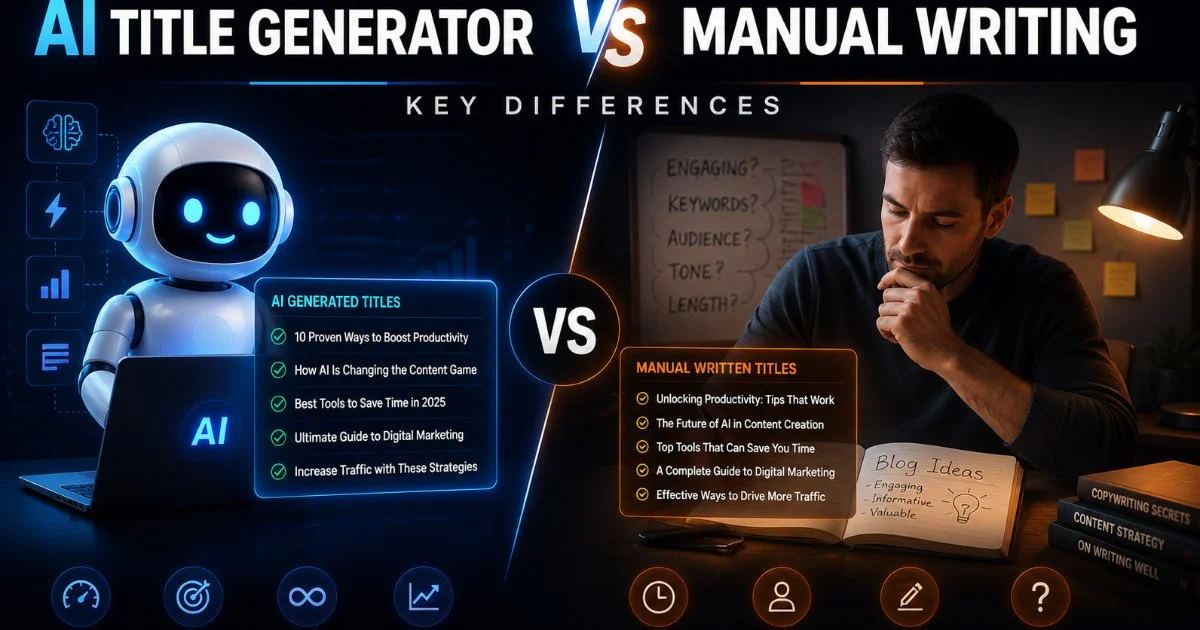
Manual brainstorming works, but it doesn't scale. A skilled copywriter might spend 20 to 30 minutes crafting five strong title options for a single article. An AI title generator produces 10 to 20 options in seconds. This doesn't replace the copywriter's judgment; it accelerates the ideation phase. Think of it like using a calculator for arithmetic. You still need to know what problem you're solving, but the computational work happens instantly.
Compared to older headline analyzer tools, which score titles you've already written, an AI title generator takes a fundamentally different approach. It creates titles rather than evaluating them. Some marketers use both in sequence: generate options with AI, then run top candidates through a headline analyzer to check emotional impact scores and readability. This two-step workflow combines the creative breadth of AI with the analytical rigor of scoring tools.
Other AI content tools exist for writing full articles, generating outlines, or creating social media captions. A dedicated title generator is more focused, and that focus matters. Tools designed specifically for headline generation tend to be better at it than general-purpose writing assistants, because their training and interface are optimized for that single task. When you need blog post title ideas or YouTube video titles, a specialized tool delivers more relevant and refined results than asking a general chatbot.
Also Read: OG Tags for Social Media Preview Optimization Guide
| Feature | AI Title Generator | Headline Analyzer | General AI Writer |
|---|---|---|---|
| Creates new titles | Yes | No | Yes (less focused) |
| Scores existing titles | Some tools | Yes | No |
| Platform-specific formatting | Yes | Limited | Rarely |
| SEO keyword integration | Yes | Partial | Varies |
| Speed (titles per minute) | 20+ | 1 (manual input) | 5 to 10 |
| Best for | Title ideation | Title evaluation | Full content drafts |
For marketers managing multiple channels and publishing frequently, using a specialized SEO title generator alongside broader content tools creates an efficient production pipeline. You ideate titles quickly, select and customize the best options, and move straight into content creation with a clear direction already established. The title shapes the entire piece, so getting it right early saves revision time downstream.
Frequently Asked Questions
?How do I get more targeted titles from a single keyword input?
?How does an AI title generator differ from old keyword-stuffing tools?
?How long does it realistically take to title ten articles using this tool?
?Is it a mistake to publish AI-generated titles without reviewing them first?
Final Thoughts
An AI title generator won't replace your creative judgment, but it will give that judgment better raw material to work with. These tools handle the volume and pattern-matching that human brains find tedious, freeing you to focus on what you do best: understanding your audience and choosing the words that will connect.
If you're producing content at any real scale, whether blog posts, videos, ads, or social updates, building AI-assisted titling into your workflow is a practical move with measurable results. The title is the smallest piece of content that makes the biggest difference.
Disclaimer: Portions of this content may have been generated using AI tools to enhance clarity and brevity. While reviewed by a human, independent verification is encouraged.