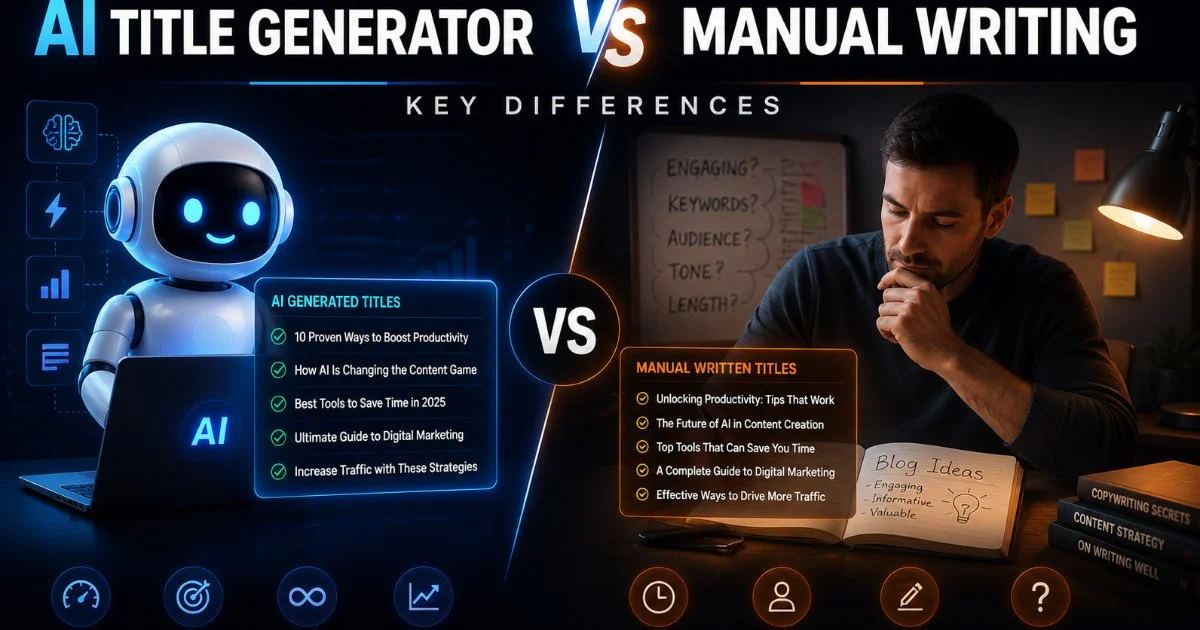
An AI title generator can produce dozens of title ideas for blog posts, YouTube videos, and social media content in seconds. Manual writing, on the other hand, relies on human creativity, intuition, and experience to craft each headline by hand. Both approaches have real strengths and notable weaknesses. For content creators and marketers producing at scale, choosing the right method (or the right blend) directly affects click-through rates, SEO performance, and audience engagement.
The stakes are higher than most people realize: your title is the first and sometimes only thing a potential reader sees. A weak headline means wasted effort on great content that nobody clicks. This comparison breaks down both methods across four key dimensions so you can make an informed decision about your content writing workflow.
Key Takeaways
- AI title generators produce dozens of optimized options in under 30 seconds.
- Manual writing gives you full creative control over voice, tone, and nuance.
- AI tools excel at data-driven keyword integration for SEO-focused blog titles.
- Human writers still outperform AI when brand personality matters most.
- The best results come from combining AI-generated ideas with human editing.

Speed and Volume of Title Production
The AI Speed Advantage
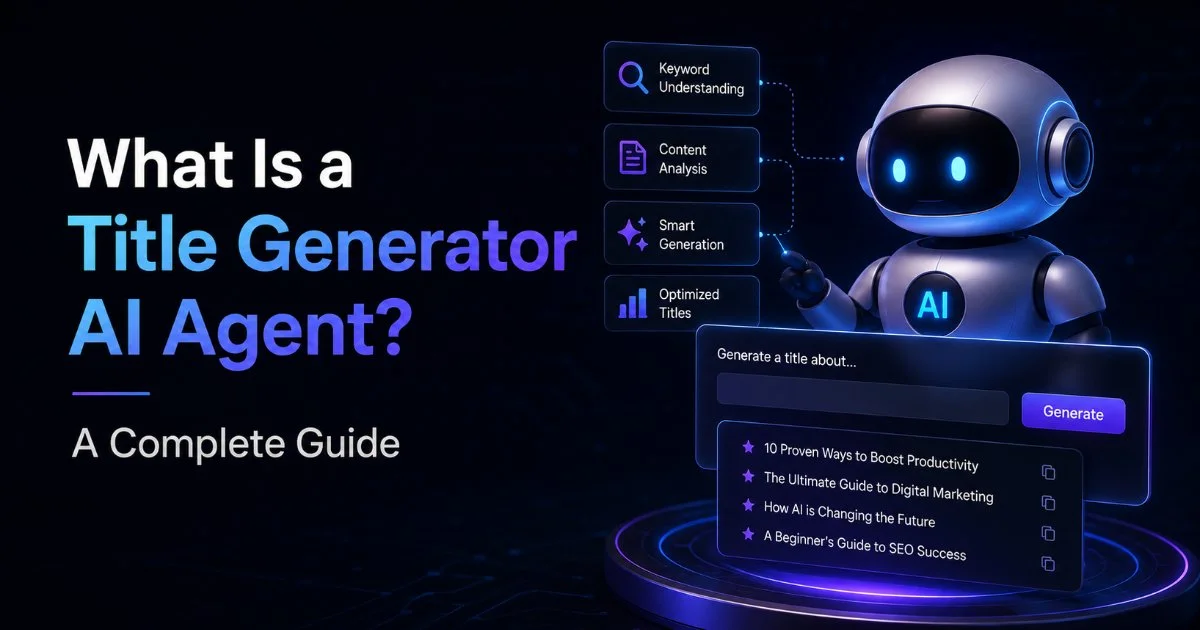
Speed is where AI title generators dominate the comparison most dramatically. A tool like the Title Generator AI Agent can analyze your topic, consider keyword relevance, and produce 10 to 20 title variations in under 30 seconds. That kind of output would take a human writer 30 minutes to an hour, and the human version would likely include fewer variations. When you're managing a content calendar with 20 or more posts per month, that time savings compounds quickly.
The volume advantage extends beyond raw numbers. AI tools can generate title ideas across different formats simultaneously: listicles, how-to guides, question-based headlines, and curiosity-driven options. A single prompt can yield YouTube titles, blog titles, and social post headlines in one batch. This makes AI particularly valuable during brainstorming sessions where quantity of options helps teams identify the strongest direction.
Manual Writing Pace
Manual title writing is inherently slower, but that slowness isn't always a disadvantage. Human writers naturally filter ideas through context that AI doesn't have: knowledge of inside jokes within a community, awareness of competitor headlines already published, and a gut sense for what will resonate with a specific audience segment. Each title gets more deliberate attention. The tradeoff is obvious, though. When deadlines are tight and you need options fast, manual writing becomes a bottleneck.
Experienced copywriters can produce strong titles relatively quickly, but "relatively" still means minutes per title rather than seconds. For solo content creators managing blogs, YouTube channels, and social accounts simultaneously, the manual approach often leads to title fatigue. You settle for "good enough" because you've already spent your creative energy before the actual content writing begins. That's a real cost, even if it doesn't show up on a spreadsheet.
Set a timer for 10 minutes when writing titles manually. If you haven't found a winner, switch to an AI generator to break through the block.
Creativity and Originality
Pattern Recognition vs. Intuition
AI title generators work by recognizing patterns in high-performing content. They know that numbers in headlines increase clicks, that "how to" formats perform well for search, and that certain emotional trigger words drive engagement. This pattern recognition is powerful, but it also means AI tends to produce titles that feel familiar. You'll see well-optimized suggestions, but rarely something that makes you stop and think, "I never would have framed it that way." As noted in research on the best AI agents for content creation, these tools excel within proven frameworks.
Human creativity operates differently. A skilled writer can make unexpected conceptual leaps, use cultural references, deploy irony, or craft a title that works on multiple levels. Think about titles like "Your Blog Post Title Is Lying to You" or "The Headline Formula That Ruined the Internet." These require understanding subtext, tone, and audience psychology at a level AI hasn't consistently mastered. The best human-written titles often break the very rules that AI tools are trained to follow.
Also Check: How AI Content Generators Improve SEO Blog Posts
"AI excels at producing titles that follow proven rules, while humans excel at knowing exactly when to break them."
Brand Voice Considerations
Brand voice is where manual writing still holds a significant edge. Every brand has quirks, preferences, and boundaries that are difficult to communicate in a prompt. A title generator might suggest "10 Insane Hacks to Boost Your Traffic" when your brand voice is calm and authoritative. You can refine prompts to guide tone, but the results often require editing anyway. Understanding how AI title generators create better blog titles helps you set realistic expectations about what these tools can and cannot match in terms of voice.
That said, AI tools are improving rapidly in this area. Some generators now allow you to input brand guidelines, sample titles, or tone descriptors. The gap between AI-generated and human-crafted titles is narrowing for brands with well-documented voice guidelines. For brands still developing their identity, though, human writers remain the safer choice. They can intuit what "sounds right" even when the brand guidelines document doesn't exist yet.
If your brand voice is highly distinctive (think Wendy's Twitter account or Mailchimp's quirky tone), always run AI-generated titles through a human editor.
SEO and Performance Optimization
Keyword Integration
Search engine optimization is arguably where AI title generators provide the most measurable advantage. These tools are built to understand keyword density, search intent, and character length limits. When you need blog titles that rank, an AI generator can incorporate target keywords naturally while keeping the title under 60 characters for optimal SERP display. Manual writers can do this too, but it requires conscious effort and SEO knowledge that not every content creator possesses. For a deeper look at this process, see how to use AI for content writing title optimization.
AI tools can also cross-reference your title against existing top-ranking content to assess competitiveness. Some platforms analyze the emotional appeal, word count, and power word density of titles already ranking on page one, then generate alternatives designed to compete. This data-driven approach removes much of the guesswork from SEO title creation. A human writer relying on intuition alone would need to manually research competitors, check keyword volumes, and verify character counts, all of which adds time.
Testing and Iteration
A/B testing headlines is standard practice for serious marketers, and AI generators make the process far more efficient. Need five variations of a YouTube title to test across different thumbnails? An AI tool produces them in seconds. The same applies for email subject lines, ad copy, and social posts. Exploring top YouTube title ideas from AI tools in 2025 shows just how quickly these platforms can generate testable options for video content specifically.
Manual iteration works differently. A human writer might produce two or three strong variations, test them, learn from the data, and apply those lessons to future titles. This slower feedback loop actually builds institutional knowledge. Over time, the writer develops an instinct for what works with your specific audience. AI tools don't accumulate that contextual learning between sessions (unless specifically designed with memory features). Both approaches have merit, but AI wins on testing volume while humans win on accumulated wisdom.
Cost and Scalability
Resource Breakdown
Cost is straightforward to compare when you look at the numbers directly. Most AI title generator tools range from free (with limited features) to $20 to $50 per month for professional plans. A freelance copywriter specializing in headlines charges $50 to $150 per hour, and an in-house content strategist costs significantly more when you factor in salary and benefits. For a solo creator publishing three blog posts and two YouTube videos per week, the AI tool pays for itself within the first day of use each month.
| Factor | AI Title Generator | Manual Writing |
|---|---|---|
| Cost per title | $0.01 to $0.10 | $5 to $25 |
| Time per title | 5 to 15 seconds | 5 to 20 minutes |
| SEO optimization | Built-in analysis | Requires separate tools |
| Brand voice accuracy | Moderate (prompt-dependent) | High (with experienced writer) |
| Scalability | Nearly unlimited | Limited by human capacity |
| Creative originality | Moderate | High |
Scalability favors AI decisively. If you're managing content for multiple brands, multiple platforms, or multiple languages, AI tools handle the volume without fatigue or quality degradation. A human team scaling from 10 to 100 titles per week needs new hires. An AI tool handles the increase with the same subscription. For agencies and media companies, this scalability represents a significant operational advantage that manual processes simply cannot match.
When to Use Each Approach
The "right" approach depends on your specific situation. If you're a solo blogger publishing content writing guides three times a week, an AI title generator saves hours and delivers consistently optimized results. If you're a premium brand where every headline reflects carefully cultivated positioning, manual writing (or at minimum, heavy human editing of AI suggestions) is worth the investment. Most content creators will find the sweet spot somewhere in between.
The most productive workflow for most marketing teams combines both methods. Start with AI-generated title ideas to build a foundation of options, then have a human editor refine the top candidates for brand voice, creativity, and contextual fit. This hybrid approach captures the speed and data advantages of AI while preserving the nuance and originality that human writers bring. It's not about choosing one side; it's about knowing which tool to reach for at each stage of the process.
Use AI to generate your initial list of 10 to 15 options, then manually edit your top three picks for brand voice and originality before publishing.
Frequently Asked Questions
?How do I combine AI-generated titles with manual editing effectively?
?Does an AI title generator work equally well for YouTube and blog titles?
?Is manual title writing worth the time cost for solo content creators?
?Will AI title generators hurt my brand voice over time?
Final Thoughts
AI title generators and manual writing aren't competing approaches so much as complementary ones. AI wins on speed, volume, SEO optimization, and cost efficiency. Human writing wins on creativity, brand voice, cultural sensitivity, and originality. The smartest content creators in 2025 aren't picking sides.
They're using AI tools to handle the heavy lifting of initial generation and data-driven optimization, then applying human judgment to select and polish the final result. That combination consistently outperforms either method used alone.
Disclaimer: Portions of this content may have been generated using AI tools to enhance clarity and brevity. While reviewed by a human, independent verification is encouraged.