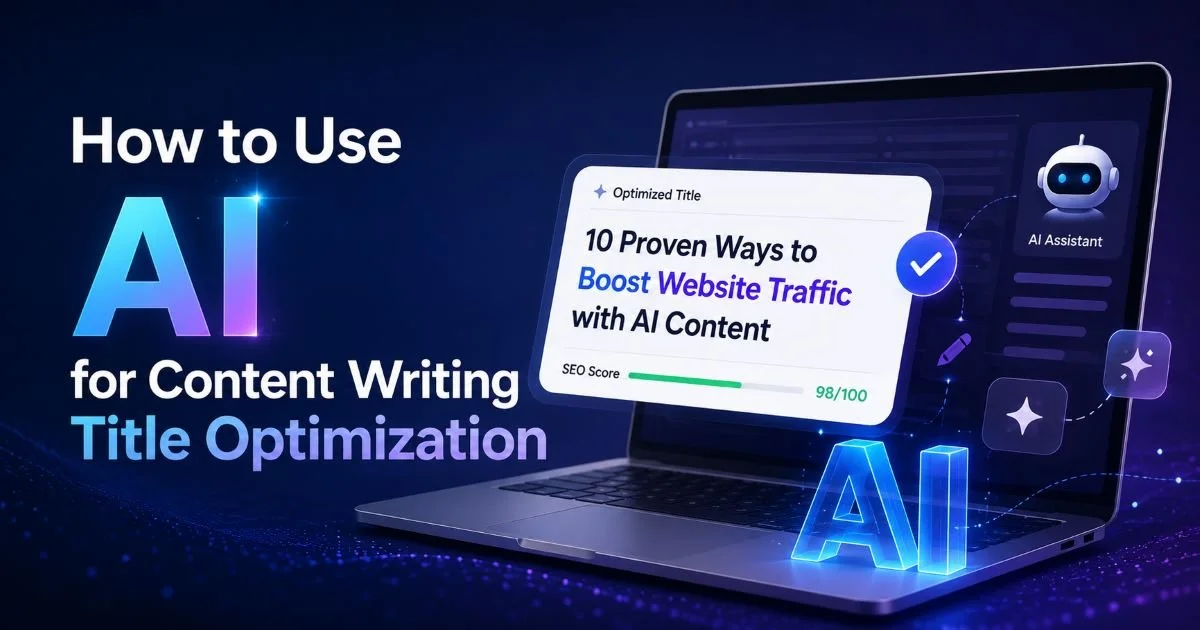
Using AI for content writing and title optimization has become one of the most practical upgrades a creator can make to their workflow. Whether you're brainstorming blog titles, testing YouTube titles, or refining headlines for ad campaigns, an AI title generator can produce dozens of strong options in seconds. But raw output isn't enough. The real skill lies in knowing how to guide the AI, evaluate its suggestions, and refine the best candidates into high-performing headlines.
This tutorial walks you through a repeatable process for optimizing your titles with AI, step by step. If you've been writing headlines manually and wondering why your click-through rates stay flat, this is your roadmap. The difference between a good title and a great one often comes down to structured iteration, and that's exactly what AI makes possible.
Key Takeaways
- AI title generators work best when you provide specific inputs like keywords, audience, and format.
- Always generate at least ten title variations before selecting your top candidates for testing.
- Combine AI speed with human judgment to catch tone mismatches and factual errors.
- Optimized titles can increase click-through rates by 20% to 40% compared to unoptimized ones.
- Iterating on AI output with follow-up prompts consistently produces stronger, more original headlines.

Step 1: Define Your Title Goals and Inputs
Choosing Your Content Type
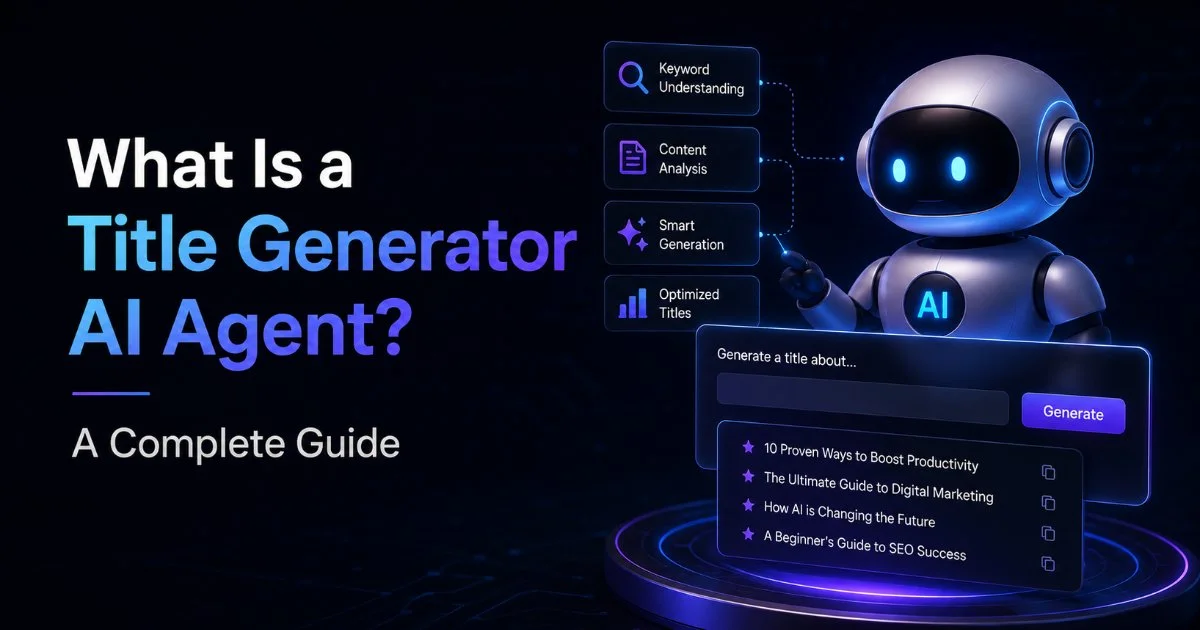
Before you type anything into an AI tool, get clear on what you're titling. A blog post title operates under different constraints than a YouTube title or a paid ad headline. Blog titles benefit from SEO keywords and specificity, while YouTube titles thrive on curiosity and emotional hooks. If you want to understand how these tools actually function under the hood, the complete guide on what a Title Generator AI Agent is explains the mechanics well. Start by writing down your content type, your target audience, and the primary action you want the reader to take.
Your goals shape every decision downstream. A title meant to rank on Google needs keyword placement in the first 60 characters. A title meant to stop someone from scrolling on social media needs a pattern interrupt or a bold claim. Define whether you're optimizing for search visibility, click-through rate, shareability, or some combination. This single decision changes the kind of prompts you'll write and the criteria you'll use to evaluate the AI's output.
Gathering Keyword Data
Spend five minutes gathering your keyword data before touching any generator. Pull your target keyword, two or three secondary phrases, and the search intent behind them. For example, if you're writing about home office setups, your primary keyword might be "best home office desk" while secondary phrases include "ergonomic desk 2025" and "standing desk under $500." This information becomes the fuel that powers relevant AI output. Without it, you'll get generic suggestions that sound polished but miss what your audience is actually searching for.
Write your content type, audience, primary keyword, and goal in one sentence before generating any titles. This becomes your prompt foundation.
At the end of this step, you should have a brief written down: content format, audience, primary keyword, secondary keywords, and the desired outcome. Think of it as a creative brief for your AI collaborator. This brief takes under five minutes to create, but it dramatically improves the quality of every title the AI produces. Skipping it is the most common reason people get disappointing results from AI writing tools.
Step 2: Generate Title Ideas With AI
Crafting Effective Prompts
Now it's time to feed your brief into an AI title generator. The quality of your prompt directly determines the quality of your output. Instead of typing "give me blog titles about productivity," try something like: "Generate 15 blog title options for remote workers aged 25 to 40 who want to improve their morning routines. Include the keyword 'morning productivity habits' and mix listicles, how-to formats, and question-based titles." The specificity matters. As explored in how AI title generators create better blog titles, structured prompts consistently outperform vague ones.
Request at least ten to fifteen variations per prompt. You're not looking for the perfect title on the first try. You're looking for raw material to work with. Ask the AI to vary the format: some titles as numbered lists, some as direct statements, some as questions. This spread gives you options across different psychological triggers. A question title creates curiosity. A numbered list signals scannable value. A direct statement conveys authority. You want all three in your initial batch.
Common Mistakes in Generation
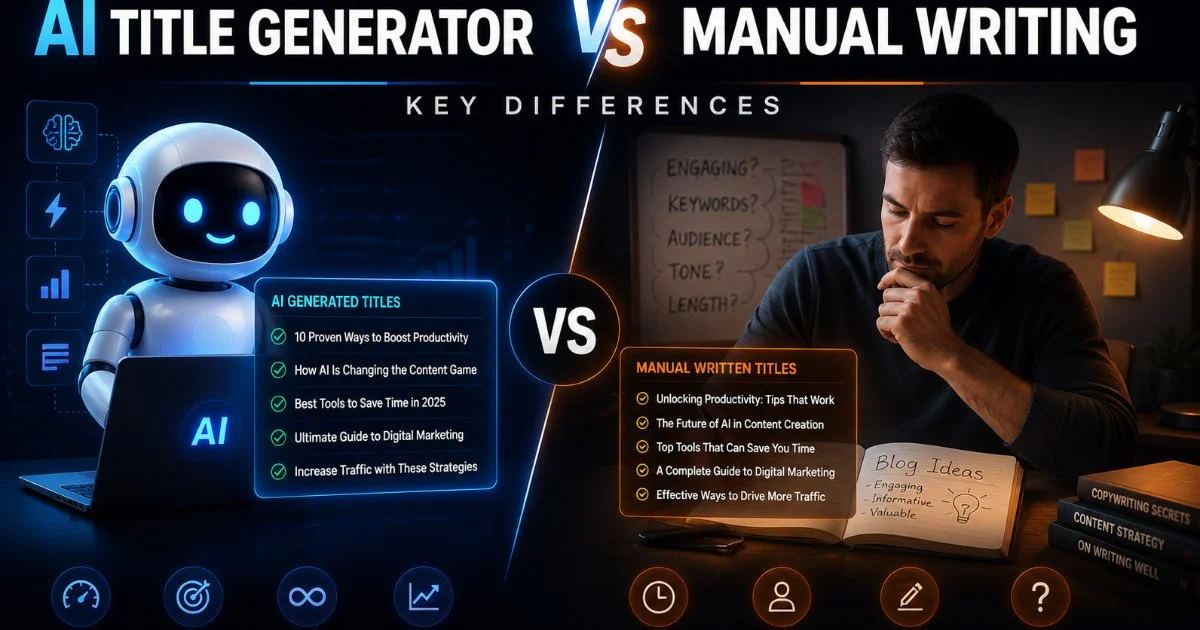
The biggest mistake at this stage is accepting the first batch without iteration. Run at least two or three follow-up prompts. Ask the AI to make certain titles shorter, more emotional, or more specific. Ask it to rewrite the weakest three with a different angle. This iterative approach is where the real optimization happens. One prompt gives you decent titles. Three prompts give you great ones. The difference between AI title generation and manual writing becomes most obvious during this iteration phase, where AI can produce fifty variations in the time it takes to manually brainstorm five.
Never publish the first title an AI generates without reviewing it. First-draft AI titles often contain generic phrasing, awkward word choices, or keyword stuffing.
By the end of this step, you should have 20 to 30 title candidates saved in a document or spreadsheet. Don't filter yet. Quantity is the goal here, and you'll refine in the next step. Mark which titles came from which prompt so you can identify which prompt strategy produced the strongest options. This data helps you write better prompts in future sessions, building a compounding skill over time.
"One prompt gives you decent titles. Three prompts give you great ones."
Step 3: Evaluate and Shortlist Your Best Titles
Scoring Criteria
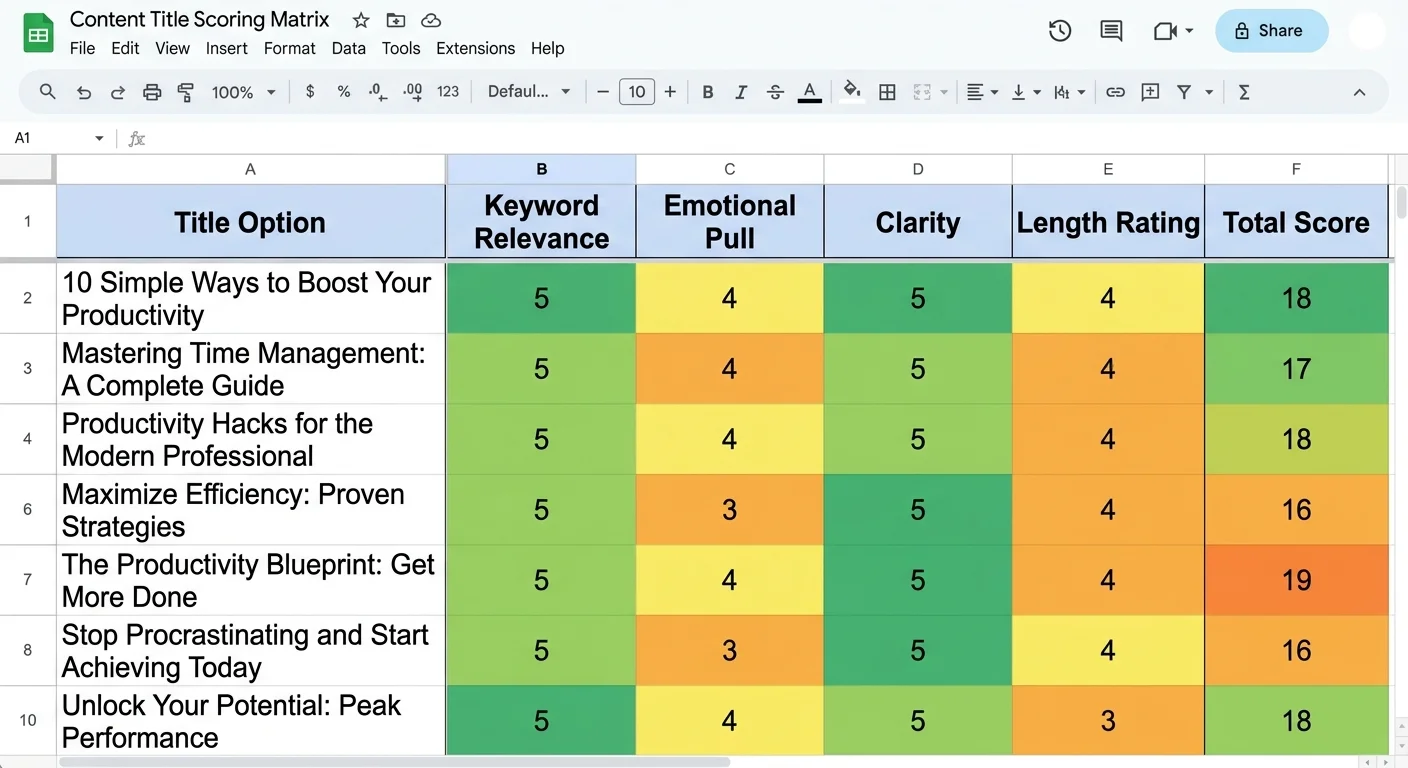
With your list of 20 to 30 candidates ready, it's time to apply structured evaluation. Don't rely on gut feeling alone. Score each title across four dimensions: keyword relevance, emotional pull, clarity, and length. A title that nails three of these four is a strong contender. One that hits all four is your likely winner. Assign a simple 1 to 5 score for each dimension and add them up. This takes the subjectivity out of headline selection and gives you a defensible reason for your final choice.
| Scoring Dimension | What to Look For | Weight | Common Pitfall |
|---|---|---|---|
| Keyword Relevance | Primary keyword appears naturally in first 60 characters | High | Keyword stuffing or missing keyword entirely |
| Emotional Pull | Creates curiosity, urgency, or promise of value | High | Clickbait that overpromises and underdelivers |
| Clarity | Reader knows exactly what the content covers | Medium | Vague or overly clever phrasing |
| Length | Under 60 characters for SEO, under 70 for YouTube | Medium | Titles that get truncated in search results |
Go through your list and eliminate anything scoring below 12 out of 20. You'll typically cut about half your titles in this first pass. Then read the survivors out loud. Titles that sound awkward when spoken rarely perform well on screen either. Pay attention to rhythm: the best headlines have a natural cadence, almost like a short sentence you'd say to a friend. "How I Doubled My Traffic With One Title Change" reads better than "Doubling Website Traffic Through Strategic Title Modification."
YouTube titles have different optimal lengths than blog titles. Aim for 47 to 55 characters for YouTube to avoid truncation on mobile devices.
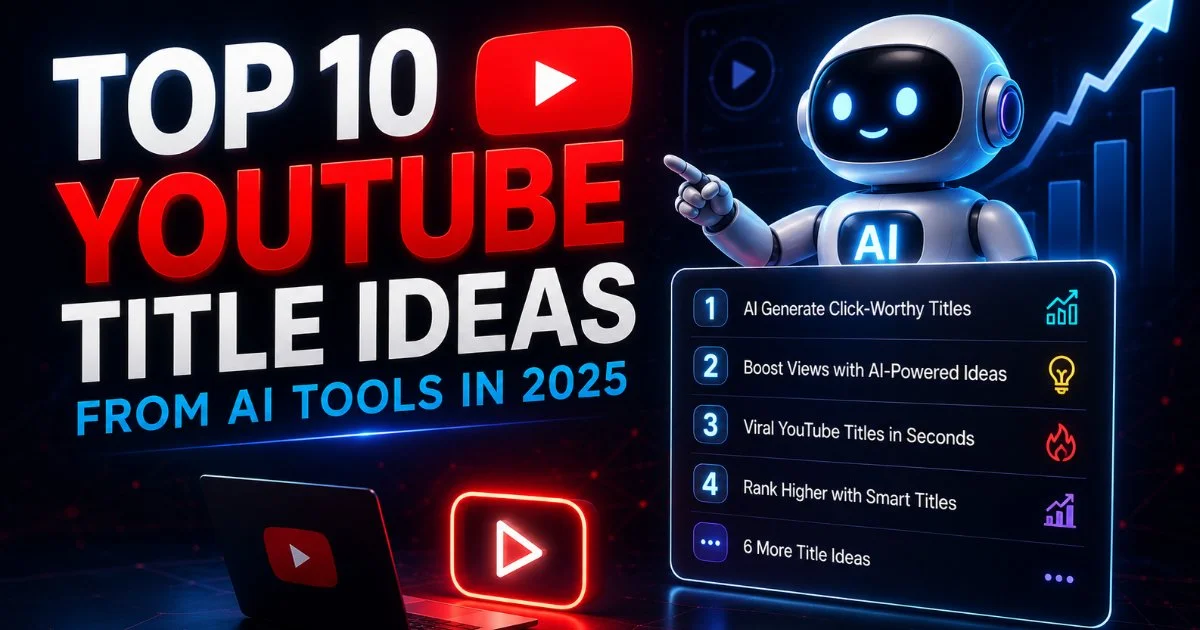
After scoring and reading aloud, narrow your list to three to five finalists. These are the titles that scored highest, sounded natural, and matched your original brief. Write them side by side and compare. Look for the one that makes you want to click, not the one that sounds most "professional." Professional can mean boring. The goal is appropriate tone, but forced formality kills curiosity. For more inspiration on what strong AI-generated headlines look like in practice, the roundup of top YouTube title ideas from AI tools in 2025 offers useful benchmarks.
Step 4: Refine, Test, and Finalize
A/B Testing Your Titles
Your three to five finalists are strong, but testing reveals which one actually performs. For blog posts, many CMS platforms and plugins support A/B title testing. For YouTube, you can use the platform's built-in thumbnail and title testing feature. Run your top two titles against each other for at least 48 hours or 1,000 impressions, whichever comes first. The data will often surprise you. Titles you loved during brainstorming sometimes underperform, while ones you almost cut end up winning by significant margins.
If A/B testing isn't available for your platform, use social media as a proxy. Post two different titles linking to the same content across your channels and track which gets more engagement. Twitter and LinkedIn work well for this because impressions accumulate quickly. Even informal polls in creator communities can provide useful signal. The key is making decisions based on audience behavior rather than personal preference. Your audience may respond to formats you wouldn't naturally choose, and that's exactly the kind of insight that compounds over time.
Once testing reveals your winner, do one final refinement pass. Check the title against your SEO requirements: is the keyword placed early enough? Is the character count within your target range? Does it match the search intent you defined in Step 1? Make small adjustments if needed, but resist the urge to rewrite a proven winner. Minor tweaks to word order or punctuation are fine. Changing the core structure of a title that already tested well is not.
Save your losing title variations in a swipe file. They often work perfectly for social media posts, email subject lines, or future content on related topics.
At the end of this step, you should have one finalized, tested title ready to publish. You should also have a documented process you can repeat: brief creation, AI generation with iterative prompts, structured scoring, and testing. This workflow turns title writing for blogs and a guessing game into a systematic practice. Most content creators who adopt this approach report spending less time on titles while producing consistently better results. The system improves with each use as you learn which prompt styles and formats resonate with your specific audience.
Frequently Asked Questions
?How many title variations should I generate before picking one?
?Do blog title prompts work the same way as YouTube title prompts?
?How long does it realistically take to optimize a title using this process?
?What's the biggest mistake people make when using an AI title generator?
Final Thoughts
Title optimization with AI isn't about replacing your creative instincts. It's about giving those instincts better raw material to work with. The four-step process of defining goals, generating with structured prompts, scoring systematically, and testing with real data turns headline writing into a repeatable skill rather than a sporadic talent.
Content creators who follow this workflow consistently outperform those who rely on first-draft inspiration alone. Start with your next piece of content, run through these steps once, and compare the result to your usual approach. The difference will speak for itself.
Disclaimer: Portions of this content may have been generated using AI tools to enhance clarity and brevity. While reviewed by a human, independent verification is encouraged.